

Why Do My Winter Clothes Have Holes?
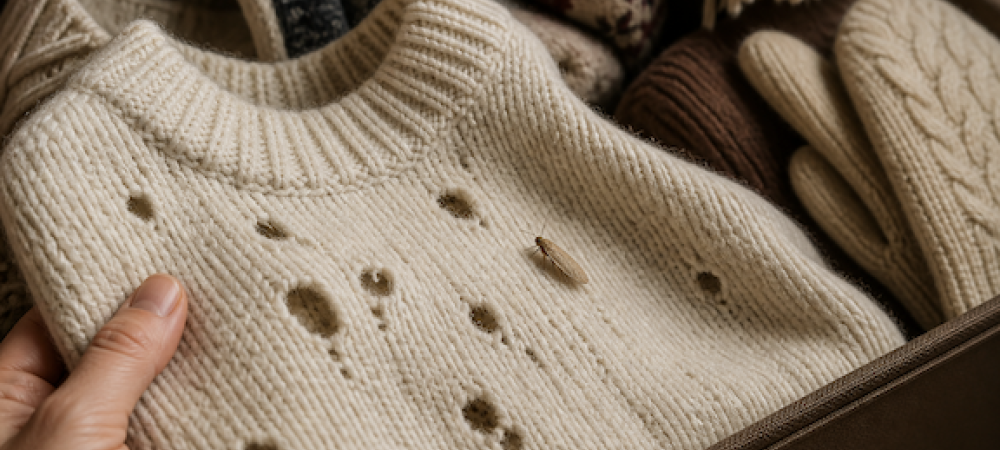
Holes in stored winter clothing are almost always caused by clothes moth larvae, not the adult moths you may have seen flying around. Adult clothes moths don't eat fabric at all, so finding damage deep inside a sealed box of sweaters isn't a mystery or a sign you're losing your mind. It's simply where the larvae fed before pupating.
Why Your Winter Clothes Have Holes
Clothes moth larvae, not adult moths, are responsible for the damage you're finding. The two species most likely to blame are the webbing clothes moth and the casemaking clothes moth, and both feed exclusively on animal-based fibers like wool, fur, feathers, and silk. Once a female lays eggs on a suitable fabric, the larvae hatch and begin feeding immediately, often working in hidden spots like collars, cuffs, and folds where damage goes unnoticed for weeks or months.
How to Tell If Clothes Moths Are the Cause
A few clues can confirm whether clothes moths are behind the damage in your closet or storage bins.
Signs to Look For
- You've seen small, tan or golden moths fluttering near closets or storage areas
- The holes look chewed or grazed rather than torn
- You spot a small, pale caterpillar-like larva on or near the fabric
- Damage is concentrated on wool, fur, feathers, or silk rather than synthetic fabrics
- You notice a silky webbing or a tiny fabric-covered "tube" attached to the item
Why This Is Especially Common in Pennsylvania
The webbing clothes moth is more common in Pennsylvania and other northern states than the casemaking clothes moth, according to Penn State Extension. That matters because the two species behave a little differently: webbing clothes moth larvae spin loose silk webbing directly over the fabric they're feeding on, while casemaking larvae build and carry a portable silk case with them as they eat. Knowing which one you're dealing with can help a pest professional target treatment more precisely.
Penn State Extension is direct on this point: never apply pesticides to clothing or bedding. Pesticide labels don't list these items as approved application sites, and treating fabric directly can be unsafe. The more effective approach is laundering or dry-cleaning infested items, sealing clean items in airtight containers, and thoroughly vacuuming the areas where larvae have been feeding, including under baseboards and around heating vents where cast pet hair and food residue can also attract them.
What Actually Attracts Clothes Moths
Clean fabric isn't a target. Clothes moth larvae are drawn to fibers stained with body oils, sweat, or food residue, which is why an unworn but unwashed sweater can be just as vulnerable as one you wore all season. Synthetic fabrics and cottons are generally safe from clothes moth larvae unless they're stained, since the larvae need the organic residue those stains provide. This is also why larvae are sometimes found in unexpected places, including old wasp nests and dead insects trapped in wall voids or attics, anywhere with a similar organic food source.
How to Protect Your Winter Clothing
A few consistent habits go a long way toward keeping clothes moths out of your storage for good.
Prevention Checklist
- Wash or dry-clean items before storing them, even if they look clean, since sweat and body oils are what larvae are after
- Store off-season clothing in sealed, airtight containers rather than open bins or cardboard boxes
- Vacuum closets, storage areas, and the items themselves regularly, and dispose of the vacuum bag when finished
- Check natural-fiber items periodically even while stored, since damage can take one to three months to become visible
- Avoid storing wool or fur items near cast pet hair, which can attract larvae on its own
When to Call a Professional
Vacuuming and proper storage solve most clothes moth problems, but larger infestations in area rugs, carpets, or upholstered furniture are best handled by a professional rather than at-home treatment, since safe and effective pesticide application on these surfaces requires reading and following label directions precisely. If you're finding repeated damage across multiple items or can't pinpoint where an infestation is coming from, it's a sign the problem has spread beyond what cleaning alone will fix, and it's worth having it looked at through a full home pest inspection rather than guessing.
A few damaged sweaters are frustrating, but they're also an early warning sign worth acting on before the infestation spreads to rugs, upholstery, or other stored fabrics in your home.
Finding holes in your stored winter clothes, or not sure what's causing the damage? Call Witt Pest Management at 412-681-1900 and we'll help you figure out the right next step.