
Why Cafeterias and Kitchens Are the First Place Pests Show Up in Schools
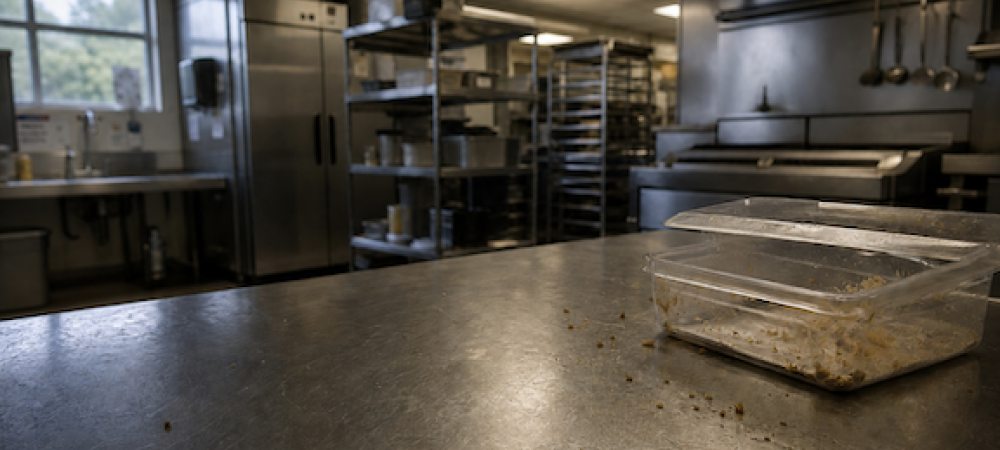
School cafeterias and kitchens attract pests before any other part of a building because they concentrate the three things pests need most: food, moisture, and regular trash volume. A hallway or classroom might go months without a pest sighting, while a kitchen with daily food prep, dishwashing, and waste disposal offers a constant draw. Understanding why kitchens are the entry point is the first step toward stopping a pest problem before it spreads into the rest of the building.
Why Kitchens Are the Entry Point, Not Just a Symptom
Food service areas create ideal pest conditions simply by operating normally. Standing water near dish pits, food residue on equipment and floors, and trash staged for pickup all provide exactly what cockroaches, flies, and rodents are searching for. This isn't a sign of poor sanitation on its own, it's the nature of food service. A kitchen following every cleaning protocol can still attract pests if the building's exterior isn't equally well-sealed and monitored.
Who Actually Inspects Your Cafeteria in Western PA
Pennsylvania law requires cafeteria health and safety inspections at schools, but jurisdiction depends on which county the school is in. According to the Pennsylvania Department of Agriculture, schools are classified as retail food facilities, and most counties fall under the department's direct inspection authority. Seven counties, including Allegheny, run their own health departments instead.
| County Type | Who Inspects | Applies To (Witt Service Area) |
|---|---|---|
| County health department | The county's own health department | Allegheny County (Pittsburgh and surrounding municipalities) |
| PA Department of Agriculture | State-level PDA inspectors | Westmoreland, Washington, Butler, Beaver, Armstrong counties |
This matters practically: a school in Pittsburgh answers to the Allegheny County Health Department directly, while a school in Greensburg or Washington answers to the state. Either way, violations tied to pest activity, not just food handling, can result in fines and repeat inspections, so knowing who's coming and what they're looking for is part of staying ahead of a problem.
What Pests Are Most Common in School Kitchens
A handful of pests account for the overwhelming majority of school food service issues.
- German cockroaches: thrive in warm, humid equipment areas like behind dishwashers and under cooking lines
- House flies and fruit flies: drawn to exposed food waste and recycling areas, often breeding in drains
- Mice and rats: enter through loading dock gaps and exploit any food storage that isn't fully sealed
- Stored product pests: small beetles and moths that infest dry goods like flour, cereal, and grain-based products in storage rooms
Signs Facility Directors Should Watch For
Catching activity early keeps a manageable issue from becoming a shutdown risk.
- Droppings near food storage, behind equipment, or along baseboards
- Grease or rub marks along walls where rodents travel repeatedly
- Small flies clustering near drains or trash areas
- Gnaw marks on packaging or stored dry goods
- Any live sighting during business hours, which should always be documented and reported immediately
How a Commercial IPM Program Reduces This Risk
An Integrated Pest Management (IPM) program shifts a school from reacting to sightings toward preventing them. Regular inspections, sealed exterior entry points, monitoring stations, and a documented service log give facility directors both a lower risk of infestation and a paper trail to show inspectors when asked. That documentation matters as much as the treatment itself, since a facility that can demonstrate an active, logged pest management program is in a stronger position during any health department review.
A cafeteria that's clean on the surface can still fail an inspection over pest activity nobody was tracking, which is exactly what a commercial pest control program built for schools is designed to prevent.
Frequently Asked Questions
Does a pest sighting automatically fail a school cafeteria inspection?
Not automatically, but it depends on severity and documentation. An isolated sighting with evidence of an active pest management program is treated differently than a pattern of activity with no response on record.
How often should a school cafeteria be inspected for pests, separate from health inspections?
Most commercial kitchens benefit from monthly pest management visits at minimum, with more frequent monitoring during high-risk seasons like early fall when rodents and stink bugs seek shelter indoors.
Who is responsible for pest control costs in a school district, the district or an outside contractor?
This varies by district policy and facility agreements, but the pest management service itself is typically contracted directly by the district or its facilities management department, separate from food service vendor contracts.
What's the difference between a health inspection and a pest control service visit?
A health inspection checks compliance at a point in time, including any visible pest evidence. A pest control service visit is ongoing and preventive, aimed at catching and addressing risk factors before they become a violation.
Can pests in a cafeteria affect other parts of the school building?
Yes. Kitchens are usually the entry point, but pests like mice and cockroaches will move into adjacent storage rooms, classrooms, and even HVAC systems if the underlying access points aren't sealed.
Dealing with pest activity in your school's food service area, or want an inspection before your next scheduled review? Contact Witt Pest Management to talk through a commercial IPM program built for your facility.